
Wildlife
The Arctic Tern and the Longest Migration on Earth
Among all the great migrations in nature, none surpasses the journey of the Arctic tern. This small seabird, weighing little more than a handful of co
Crows have a standing for cleverness that, if anything, understates the truth. Members of the corvid family, which also includes ravens, jays and magp
Crows have a standing for cleverness that, if anything, understates the truth. Members of the corvid family, which also includes ravens, jays and magpies, count among the smartest animals alive. They make tools, solve multi-step puzzles and strategise for events that have not yet happened. What makes them especially unsettling to some people is their recall for human faces. Treat a crow badly, and it may well remember you for years.
The face-memory experiments are genuinely astonishing. Researchers wearing distinctive masks captured and released wild crows, then walked the same routes later. The birds harassed anyone wearing the threatening mask, even people who had never bothered them. More strikingly, crows that had never been captured joined the scolding, having learned the danger socially. Information about a specific human face was travelling through the flock like gossip.
Tool use in crows reaches a level that approaches that of great apes. New Caledonian crows shape hooks from twigs and leaves to fish grubs out of crevices. In captivity, some have solved sequences of puzzles that require using one tool to obtain another. This kind of layered reasoning was once thought beyond any bird. The crow's small, dense brain packs an extraordinary amount of processing power into very little space.
Crows also seem to grasp conceptual ideas that feel almost philosophical. In experiments they can match objects by sameness or difference, a notion of relationship rather than mere appearance. Some studies suggest they understand simple comparisons. They can even be taught to identify quantities, choosing the larger of two groups reliably. The gap between the corvid mind and our own keeps narrowing the more we test it.
Social life among crows is layered and full of politics. They form alliances, recognise relatives and remember who has helped or cheated them in the past. Young birds often stay with their parents for years, helping to raise younger siblings. This extended upbringing gives them time to learn the many skills crow survival demands. Their society rewards cleverness as much as strength.
One of the most argued-over crow behaviours is what people call the crow funeral. When a crow dies, others often gather around the body, calling loudly for a time. Researchers believe this is less about mourning and more about learning the danger that killed it. The birds appear to be memorising the scene so they can avoid a similar fate. Even so, the sight is eerie enough to have inspired folklore for centuries.
Crows are consummate opportunists, which is exactly why they thrive alongside humans. They have learned to drop nuts onto roads and let passing cars do the shelling. Some famously wait at traffic lights and retrieve the food only when the signal stops the cars. City crows exploit rubbish, gardens and leftovers with flair. Our cluttered, wasteful world is, to a crow, a feast of possibilities.
Communication among crows is far richer than the familiar call suggests. They produce a wide repertoire of sounds, some of which seem to carry specific meanings. Different calls may announce of a hawk, a cat or a rich new food source. Crows can even copy other sounds, including human words, when motivated to do so. We are only beginning to unravel the structure of their vocal world.
Despite their cleverness, crows have long been treated with suspicion and dislike. Their black plumage and connection with carrion earned them a sinister place in myth. Farmers have persecuted them for centuries, often unfairly, as pests. Yet crows provide real services, eating insects and clearing carrion from the landscape. A closer look tends to transform old fear into genuine respect.
To build a relationship with the crows in your neighbourhood is surprisingly easy. Leave out unsalted peanuts at the same time each day, and they will quickly learn your routine. Some people report their local crows bringing small tokens in apparent exchange. Whether these are true gifts or accidents remains unproven, but the bond is real enough. Few experiences make the wildness of a city feel so close.
The more we discover about crows, the harder it becomes to see them as mere background birds. They watch, remember, plan and adapt with a sophistication that commands attention. In their glossy black eyes there is a flicker of something that feels calculating. They have turned our cities into their domains and prospered where many species failed. The crow is proof that intelligence, in nature, comes in overlooked packages.
Among all the great migrations in nature, none surpasses the journey of the Arctic tern. This small seabird, weighing little more than a handful of co
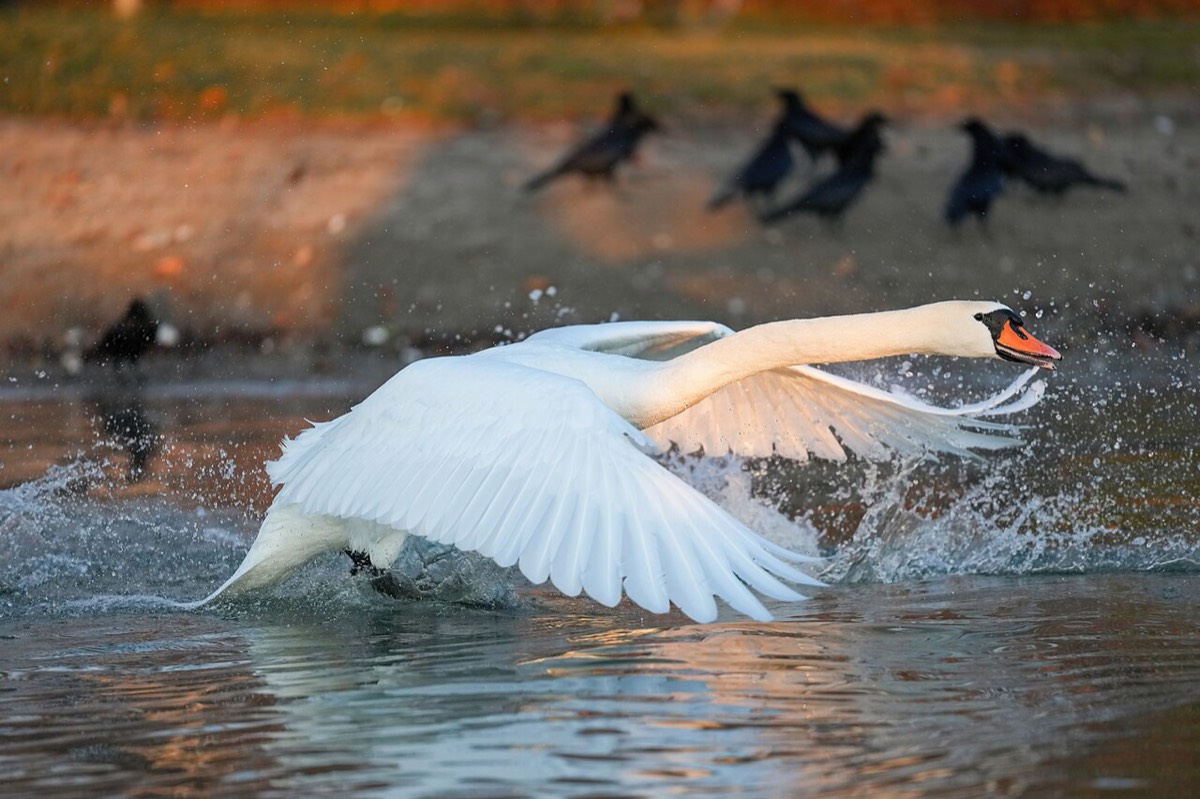
Creatures communicate in countless ways, few of which involve spoken language. Calls carry messages about food, allowing creatures to cooperate across
Surviving extreme cold calls for a toolkit of adaptations. Dense feathers trap warmth, while compact bodies limit heat loss. Together, these features