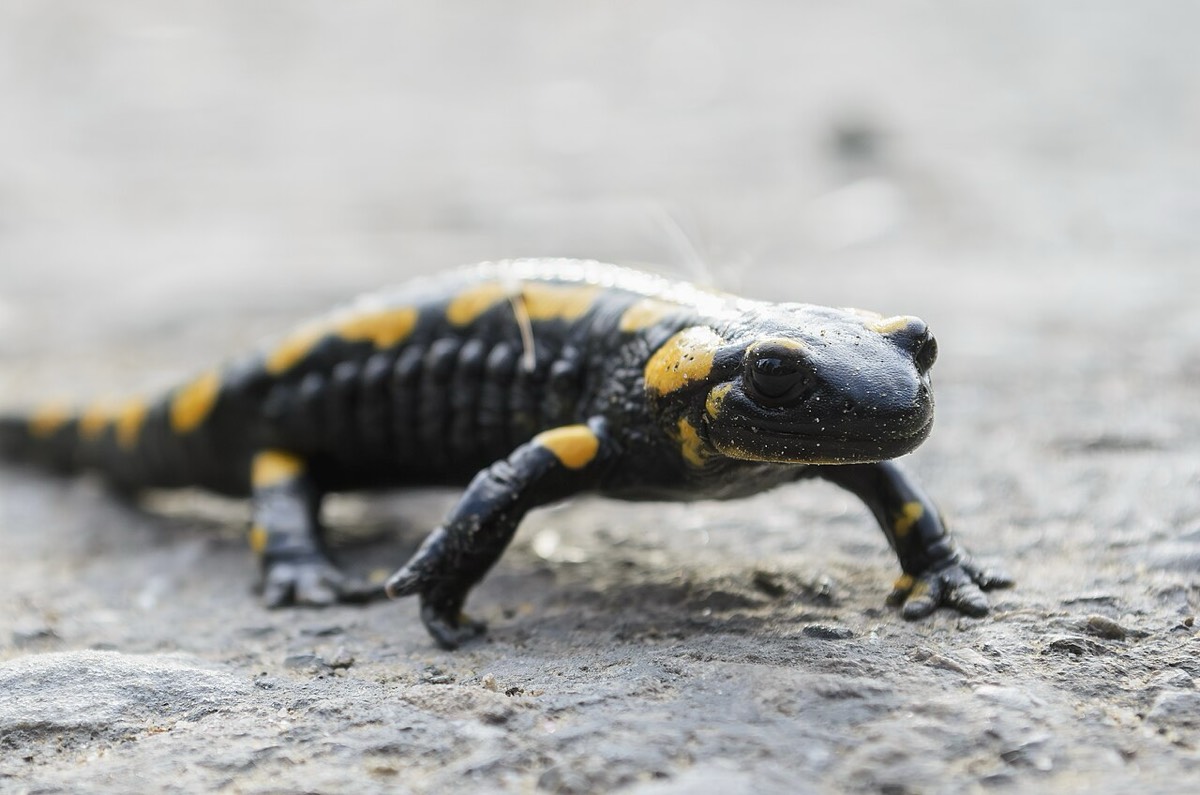
Great Crested Newt
Triturus cristatus
Least ConcernFast Facts
About
The great crested newt is the largest and most spectacular of Britain's native newts, with warty, blackish skin, a vivid orange belly mottled with black, and a fine stippling of white spots along its flanks. In the breeding season the male develops a dramatic jagged crest along his back and tail, giving the species its name.
A strictly protected species across Europe, it depends on clusters of clean ponds set within a mosaic of rough grassland, scrub and woodland.
Behaviour
During spring, males perform an elaborate underwater courtship dance, arching their bodies and wafting pheromones towards the female with a vigorous flick of the tail. Eggs are laid individually and carefully folded within the leaves of aquatic plants.
Outside the breeding season great crested newts live largely on land, sheltering by day and foraging for invertebrates on damp nights.
Did you know?
- The male's belly pattern is unique to each individual, allowing scientists to identify them
- It is one of the most strictly protected amphibians in Europe
- Females wrap each egg individually inside a folded leaf for protection
- Its skin secretes a mild toxin, advertised by the bright orange underside
Distribution
Across much of Europe, from Britain east to the Urals